Sons of Leitrim
Biographies

Baxter
Barney
Barney Baxter's story is a powerful account of the "Fighting 28th," a soldier who carried the weight of the Union cause on the battlefield while enduring profound personal tragedy at home. A son of Leitrim and a shoemaker from Milford, he survived the leaden hail of the Virginia campaigns and the invisible toll of heart disease, leaving behind a legacy of resilience that defined the Irish-American experience.

Cannon
James
James Cannons life is a story of a young man caught in the machinery of war before he had even reached his full height. A son of the bootmaking trade in Milford, he traded the leather and lasts of his fathers shop for the blue wool of the Union, only to find himself mired in the treacherous bogs of South Carolina. His journey is a testament to the early, desperate struggle for the Southern coastline and the high price paid by the boys of the "Fighting 28th."

Craig
Thomas
This profile tells the story of Thomas Craig, a son of Leitrim who stood among the very first to answer the call of his adopted country. As a member of the 1st Rhode Island Detached Militia, he belonged to one of the most elite and well-equipped early volunteer units the "first responders" of 1861. A man who traded the quiet of his new life in Providence for the chaos of the wars first great trials, his journey from the Irish townlands to the defense of the Union capital stands as a testament to the immediate and unwavering loyalty of the Rhode Island Irish.
Farrell
Cornelius
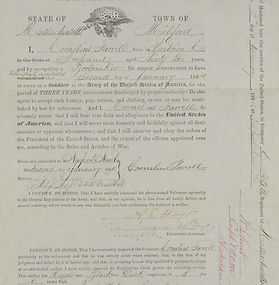
The story of Cornelius Farrell is one of the most tragic in ther collection. His journey took him from the industrial town of Milford to the most notorious prison of the Civil War: Andersonville.His wife Mary applied for a widows pension two weeks before his death. It was very common for families to apply for pensions based on "presumed death" or news from returned prisoners before the official military date was recorded.

Graham
Michael
Michael Grahams life story is a remarkable epic of the 19th-century Irish diaspora. From the quiet townlands near Ballinamore to the rugged gold mines of California, Michael traveled the entire breadth of the American continent, serving his adopted country on the Pacific frontier during the Civil War.

Hoey
Patrick
Patrick Hoeys story is a poignant example of the "Fighting Irish" of Massachusetts. From a childhood spent in the industrial heartlands of England to his final moments on the blood-soaked fields of Pennsylvania, Patricks journey was defined by a sense of duty that eventually led him to a heros grave in the nation's most famous cemetery.

Layden
Thomas
Thomas Laydens story is a fine example of the skilled Irishmen who provided the backbone of the Unions technical operations. A carpenter from the historic parish of Fenagh, Thomas served with the engineersthe men who built the bridges and fortifications that allowed the Great Union armies to move through the difficult terrain of Virginia.

McGowan
James
James McGowans service with the "Fighting Ninth" Massachusetts marks him as a member of one of the most storied Irish units in the Union Army. A bootmaker from Rossinver, he swapped his workbench for the battlefields of Virginia, where he stood his ground during the bloody retreat of the Peninsula Campaign.


O'Neill
Charles
Charles O’Neill’s life reflects the dynamic ambition of the Irish railroad men who helped build the American Midwest. From the banks of the Shannon to the bustling rail hubs of Illinois, Charles lived a life of constant movement—first as a conductor on the great iron roads and later as a soldier who stood his ground during the Union’s darkest hours

Reynolds
Hugh
Hugh Reynolds story is a poignant chapter in the history of the "Fighting 69th." A man from the quiet townlands of Gortletteragh, he traded his life as a New York clerk for the soldier's blue, only to become one of the very first Irishmen to fall for his adopted country. Hugh Reynolds's war lasted just seventy-seven days'from enlistment to death at Bull Run. His legacy is etched not only in the smoke of Bull Run but in the long, resilient struggle of his widow, Anne, to provide for their daughter in the tenements of Lower Manhattan.

Rooney
Michael
Michael Rooney's life is a harrowing narrative of the Irish immigrant experience, marked by the twin tragedies of the Great Famine and the American Civil War. A man from the rugged parish of Rossinver, he sought a new beginning in the tenements of New York, only to find himself caught in a desperate defense of a North Carolina bridge, a journey that would lead him to the gates of the most notorious prison camp in American history.

Stanford
Bernard
Bernard Stanford's journey is a striking narrative of an Irish immigrant who rose from the textile mills of Connecticut to become one of the "Forlorn Hope" a volunteer for a mission so dangerous it was deemed a near-certain suicide. A veteran of the grueling bayou campaigns, his record is a mix of extraordinary bravery and the administrative shadows that often followed soldiers as the war reached its exhausted conclusion.

Sweeney
Daniel
Daniel's story is a stirring chronicle of a Leitrim boy who climbed the ranks from the printing press to the officers corps, only to fall in the desperate trenches of the Overland Campaign. A son of Carrigallen, he was a pillar of his family and a dedicated soldier of the Irish Brigade, trading the ink-stained life of a New York laborer for the gold bars of a lieutenant and a hero's death in Virginia.

Biggins
James
James Biggins story is a testament to the steady hand and sharp eye of the Irish volunteer. A son of Mayo, that rugged corner of Leitrim, he journeyed from the west of Ireland to the front lines of the American Civil War, serving in one of the most elite and specialized units of the Union Army. His life was defined by the transition from the precision of the sharpshooter's rifle to the quiet, enduring labor of a Pennsylvania farm.
Clancy
James
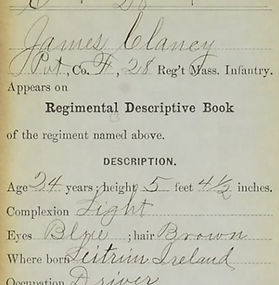
James Clancys life is a poignant example of the thousands of "missing" stories of the Irish Brigademen who survived the most horrific battles of the rebellion only to be taken by the invisible enemy that haunted every Civil War camp. A man of slight build from the old country, he stood with the "Fighting 28th" from the coastal sands of Carolina to the blood-soaked fields of Maryland, finally meeting his end in the shadow of the Rappahannock.


Hackett
William
William Hacketts story offers a rare and fascinating perspective: a Leitrim man who fought for the Confederate States of America. His journey from the docks of New Orleans to the infamous "Punch Bowl" and Elmira prison camps illustrates the complex and often divided loyalties of the Irish diaspora.

Kane
Owen
Owen Kanes service with the 28th Massachusettsthe legendary "Faugh-a-Ballagh" regiment of the Irish Brigademarks him as one of the brave men who charged the stone wall at Marye's Heights. Though his war ended with a shattering injury, his survival is a testament to the resilience of the Leitrim Irish in the face of the conflict's most brutal combat.

McBride
Barney
Barney McBrides life is a sweet success story of the Irish in New York. From his arrival as a young boy during the famine years to becoming Kingstons premier confectioner, his journey was marked by entrepreneurial spirit, a late-war stint in the Union ranks, and a long life of service to his community and his church.

McGuerty
Patrick
Patrick McGuertys journey with the 28th Massachusetts is a gritty testament to the physical and bureaucratic trials of the Irish soldier. From the blood-soaked fields of Fredericksburg to the notorious military prisons of Alexandria, Patrick faced an ordeal that tested his loyalty as much as his courage.

Morley
Dominic
Dominic Morleys service with the 28th Kentucky Infantry is a story of the "Western Theater"a grueling arena of the war where the fight was measured in long marches, constant skirmishing, and the silent toll of disease. A laborer who sought a new life in the Bluegrass State, Dominic swapped his tools for a musket to defend his adopted Kentucky, ultimately finding his peace in the same soil he helped to preserve.

Rend
William P
William was a "thinking man's soldier" a former teacher who rose to the rank of corporal and survived the most legendary slaughterhouses of the Army of the Potomac. His service record reads like a map of the Union's greatest trials, from the first shots at Bull Run to the final surrender at Appomattox.

Riley
Patrick
Patrick Riley's story is a sobering reflection of the hidden costs of the Civil War. A son of Ireland who sought stability in the mill towns of Massachusetts, he traded the heavy labor of the machine shops for the saddle of the cavalry. Though he survived the scouting parties of Louisiana, the physical toll of the campaign proved to be a burden too heavy for even his industrious spirit to carry.

Shanley
John
John Shanley's life is a testament to the courage and the harrowing sacrifices of the "Fighting 28th." A laborer from Ireland who sought a future in the industrial sprawl of Lowell, he traded the safety of the hearth for the blue coat of the Irish Brigade. His story is one of dualities: of a man twice-recorded on the muster rolls and a soldier whose honor was preserved only long after he had been laid to rest in the red clay of Virginia.

Stanford
James
James Stanford's story is one of fraternal loyalty and the heavy iron of the Union cause. A son of the farming country of Mohill, he followed his brothers across the Atlantic to the industrial heart of New Haven, only to trade his laborer,s tools for the massive siege guns of the Connecticut Heavy Artillery. His service was defined by the long, thundering sieges that eventually broke the back of the Confederacy.


Burns
Patrick
Patrick Burns story is a heart-wrenching glimpse into the lives of the Irish working class in New Yorks tenementsa story of a fatherless son who became the sole pillar of his mothers world, only to fall in the first major trial of his regiment. A bootmaker from the parish of Kiltubbrid, he traded the quiet rhythm of his cobblers bench for the roar of the Peninsula Campaign, leaving behind a legacy of devotion captured in the final, hurried lines of a soldiers letter.

Conley
Patrick Edward
Patrick Edward Conleys story is a testament to the steady, quiet endurance of the Irish immigrant in the American West. A son of the townlands of Newtown Gore, he followed the trail of his kinsmen from the ports of New York to the fertile rolling hills of Wisconsin. Though his military service came in the twilight of the Great Rebellion, his life was defined by the long, patient labor of the pioneer farmera man who turned the soil of the frontier to build a future for the generation that followed.

Drowan (Rowan)
Martin
This profile of Martin Drowan (Rowan) highlights another Leitrim man who found his way to the American Midwest. Martin Rowans service is particularly notable because he participated in some of the most famousand controversial campaigns of the entire war under General William Tecumseh Sherman.


Hart
Francis
Francis Harts journey is a striking example of the complicated path many Irishmen walked during the American Civil War. Born in the heart of Leitrim, he found himself a teenager in the deep South, eventually serving in a Georgia artillery unit before making a dramatic decision in the wars final months that would change the course of his life.


McGuerty
Patrick
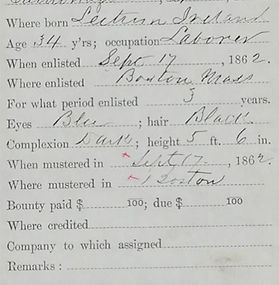
Patrick McGuerty’s journey took him from the rugged landscape of County Leitrim to the crowded wards of Boston, and finally to the legendary "Irish Brigade." His story is a poignant example of the immigrant experience—working as a laborer to build a new life, only to lose it in the harsh conditions of Belle Isle Civil War prison camp at Richmond.

O'Donnell
Henry
Henry O'Donnell,s life followed the classic arc of the Famine-era immigrant: a childhood journey from the parish of Mohill to the industrial heart of Massachusetts, followed by a period of service as a "hundred-day man" guarding the vital arteries of the Union war effort. Though his time in uniform was brief, the toll of his service followed him into his final years in the quiet pinewoods of Maine.

Reynolds
Michael P.
Michael P. Reynolds’ story is a quiet but stirring testament to the Leitrim men who served in the "Lafayette Guard." A son of Cloone, he arrived in the Ohio River Valley just as the nation was tearing itself apart, trading the peaceful hills of Mohill for the smoke-filled ridges of some of the war’s most desperate battlefields.

Riley
John
John Riley's journey is a stark, moving portrait of the Irish immigrant experience in the mid-19th century. A stone mason from the rugged parish of Cloone, he traded the limestone of Leitrim for the granite of Rhode Island, eventually laying down his life in the first great clash of the American Civil War. His story is one of rapid transition from the old country to the new, and from the life of a family man to the ultimate sacrifice on a Virginia battlefield.

Shanley
Thomas
Thomas Shanley's life is traced in fragments: a baptism in Kiltoghert, service on a blockade ship off the Carolina coast, rheumatism that a navy surgeon refused to link to duty, and finally the New York Almshouse at fifty-eight, alone, claiming no living siblings, admitted by Sister Dougherty on a January day in 1900.

Stanford
Francis
Francis Stanford's life is a complex portrait of an Irish immigrant whose journey from the quiet townlands of Leitrim led him to the fire of Maryes Heights and, later, to a long and troubled struggle within the courtrooms of New Haven. A man of the "White Star" 15th Connecticut, his military service was brief but honorable, though his post-war years were defined by a different kind of conflict, one that played out in the local headlines of his adopted home.